




Reviewed by Dr. Hassan Sannoufi, MD, CCFP, EM, Founder and Chief Medical Officer, La Vie Health Centre.
If you’ve heard of a DEXA scan, you’ve probably heard of it in the context of bone density. But DEXA body composition analysis does something far more useful for healthy adults: it maps exactly where your body stores fat, how much lean muscle mass you carry, and how those numbers compare to healthy reference ranges for your age and sex. For anyone serious about fitness, weight management, or longevity planning, a DEXA scan provides data that no scale, tape measure, or standard physical can replicate.
At La Vie Health Centre, a DEXA scan is part of our Foundation Assessment. Rather than handing you a number and sending you home, our physicians and care team use your results to build a personalized Healthspan Action Plan that connects the data to real next steps.
Book a private consultation with a Patient Advisor to learn how DEXA fits into your full health picture.
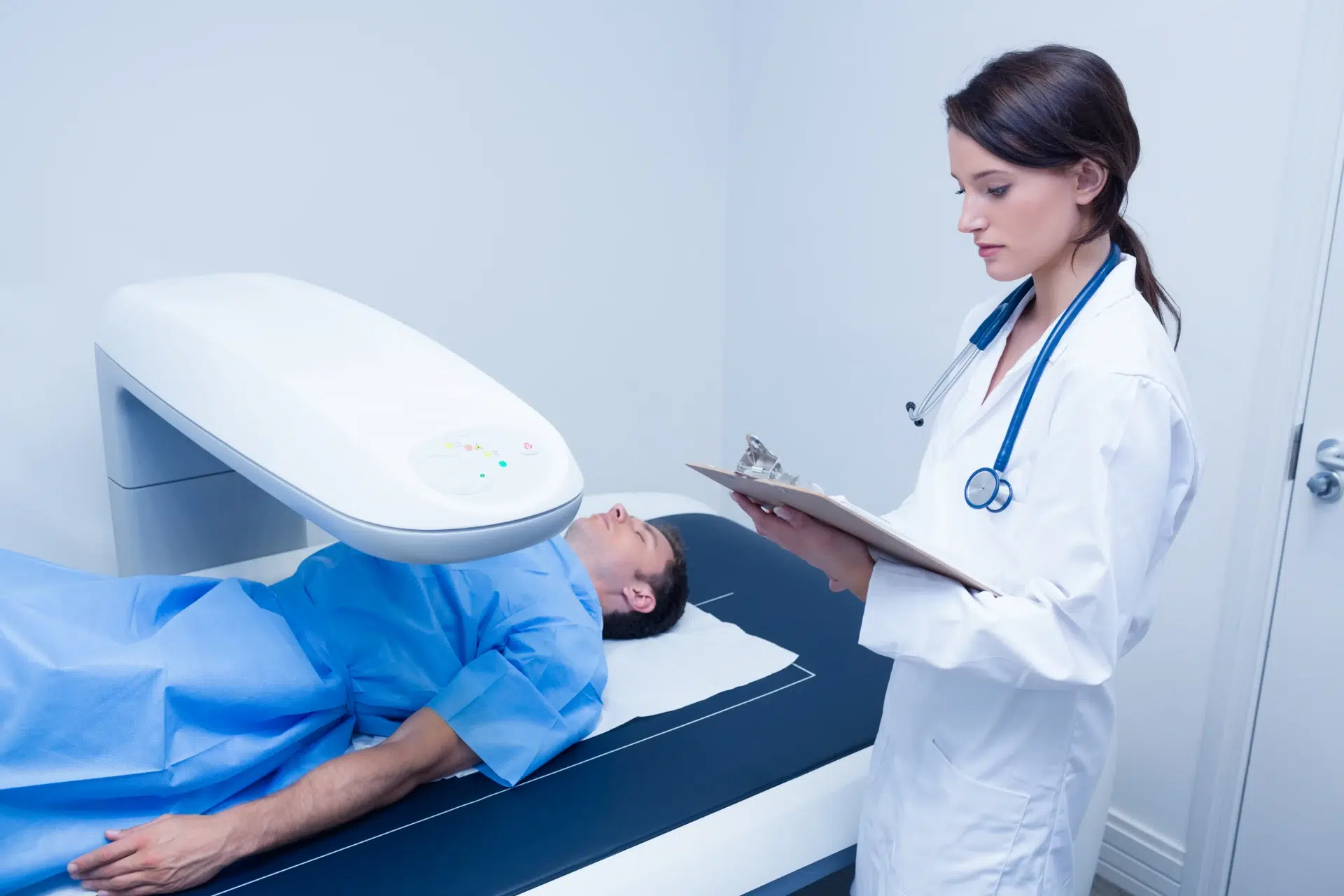
A DEXA (Dual-Energy X-ray Absorptiometry) scan measures body composition by passing two low-energy X-ray beams through your body and calculating how different tissues absorb them. The result is a detailed breakdown of three components: lean mass (muscle and organ tissue), fat mass, and bone mineral density. For body composition purposes, the fat and lean mass data are the most actionable.
Specifically, a DEXA body composition scan reports:
The visceral fat measurement deserves particular attention. Visceral fat is functionally different from the fat just under your skin. It’s associated with insulin resistance, elevated cardiovascular risk, and chronic inflammation, and it’s not visible from the outside. Someone with a normal BMI can carry a clinically significant amount of visceral fat. A DEXA scan is one of the most precise ways to quantify it.

Body weight is a rough measure. Two people who weigh exactly the same can have dramatically different health profiles depending on how much of that weight is muscle versus fat, and where the fat sits. A DEXA scan replaces the guess with a measurement.
This matters most in three scenarios:
If you’re training for a specific goal, knowing your lean mass baseline helps you track whether your program is building muscle or just shifting the scale. Athletes and active adults use DEXA scans to monitor progress with precision a scale can’t provide.
Standard weight loss programs track pounds. A physician-led approach tracks body composition: are you losing fat or losing muscle? Losing muscle while dieting is common and metabolically counterproductive. Our physician-led weight management program uses DEXA data to guide nutrition and activity recommendations based on what’s actually changing in your body.
As we age, we naturally lose muscle mass and gain fat, particularly visceral fat. Identifying these shifts early, well before symptoms appear, gives you and your physician a window to intervene through targeted exercise, nutrition, and in some cases, further investigation through hormone optimization when hormone changes are contributing to the pattern.
A DEXA report breaks your body into regions and provides separate measurements for each. Here’s how to read the key outputs:
| Metric | What It Measures | Why It Matters |
|---|---|---|
| Total body fat % | Percentage of total weight that is fat tissue | Compared to age and sex reference ranges |
| Visceral fat area | Fat stored around abdominal organs | Linked to metabolic and cardiovascular risk |
| Android/Gynoid ratio | Distribution of fat in belly vs. hip/thigh | Indicates fat patterning and associated risk |
| Lean mass by segment | Muscle and organ tissue in each limb and trunk | Identifies imbalances and monitors sarcopenia |
| Bone mineral density | Bone strength by region | Compared to norms; flags osteopenia or osteoporosis risk |
| T-score / Z-score | Standard deviation from peak bone mass or age match | Used to classify bone health status |
The most clinically useful outputs for most La Vie members are visceral fat, lean mass, and regional fat distribution, because these drive specific, actionable recommendations rather than a single number that requires further interpretation.
Several methods exist for measuring body composition. DEXA is widely regarded as the reference standard for accuracy, but here’s how it compares to the alternatives most people encounter:
| Method | How It Works | Accuracy | What It Misses |
|---|---|---|---|
| DEXA | X-ray differentiation of bone, lean, and fat tissue | High (reference standard) | Visceral fat compartment estimated, not directly isolated |
| Bioelectrical Impedance (BIA) | Electrical current through body; estimates fat from resistance | Moderate; affected by hydration | Less precise regional data; hydration-sensitive |
| Hydrostatic weighing | Underwater weighing; calculates density | High | No regional breakdown; inconvenient, not widely available |
| Skinfold calipers | Pinch measurements at multiple sites | Low to moderate | Operator-dependent; no visceral fat data |
| BMI | Weight divided by height squared | Very low as body composition indicator | Does not measure fat or muscle; no regional data |
DEXA’s advantage over BIA, which is the method built into most consumer smart scales and many gym devices, is its consistency and regional precision. BIA results can shift significantly based on when you last ate, how hydrated you are, and even the time of day. DEXA removes those variables.
At La Vie, a DEXA scan isn’t a standalone test you receive and interpret on your own. It’s one of the assessment modules in our Foundation Assessment, reviewed alongside cardiovascular screening, bloodwork, metabolic testing, and your full medical history.
When your DEXA results are ready, your La Vie physician reviews them in the context of everything else we’ve measured. A high visceral fat reading combined with elevated blood glucose, for example, points toward a different set of recommendations than the same visceral fat reading in someone with normal metabolic markers. Context is everything in preventive medicine.
From there, your results feed directly into your Healthspan Action Plan. Depending on what we find, this might include:
Specific nutrition targets developed with a registered dietitian
This model is what separates a physician-integrated DEXA scan from a standalone body composition studio session. The number only matters if it leads somewhere. At La Vie, it always does.
Connect with a Patient Advisor today to learn how DEXA results fit into a full picture of your health. Call our Ottawa team at (613) 592-0862 or our Oakville team at (905) 528-4322.

La Vie offers DEXA body composition scanning at our Ottawa locations in Kanata and Downtown Ottawa, and at our Oakville clinic serving the broader GTA. DEXA is available as part of your Foundation Assessment day.
To access DEXA scanning at La Vie, you don’t need a referral from your family physician. Simply connect with a Patient Advisor, who will match you to the right program based on your health goals. Unlike standalone body composition studios, your scan is reviewed by a physician and your results are placed in the context of your full clinical picture.
A DEXA scan measures body composition by quantifying lean mass, fat mass, and bone mineral density across different regions of the body. For body composition purposes, the most clinically useful outputs are total body fat percentage, visceral fat, regional lean muscle mass, and the android/gynoid fat ratio. These measures give a precise, reproducible baseline that standard scales and BMI calculations can’t provide.
DEXA scans for bone density are covered by OHIP when medically indicated, typically for osteoporosis assessment in eligible individuals. Body composition DEXA scanning, which is the application used at La Vie for fitness, weight management, and longevity planning, is not covered by OHIP and is available through private clinics. Some extended health benefit plans may cover a portion of the cost; we recommend checking your plan details.
DEXA is considered the reference standard for body composition assessment in clinical and research settings. It’s more consistent and regionally precise than bioelectrical impedance (BIA) because the results aren’t affected by hydration status, recent meals, or time of day. Accuracy can vary slightly with different equipment and scanning protocols, which is why consistent scans on the same machine are recommended when tracking changes over time.
A DEXA body composition scan typically takes 10 to 20 minutes from start to finish, including positioning and the scan itself. The imaging portion is brief, usually under 10 minutes. At La Vie, your scan is scheduled as part of your assessment day, so there’s no separate appointment or wait time.
For most healthy adults using DEXA to track body composition changes, a scan every 6 to 12 months is typical. If you’re actively working on a weight management or body recomposition goal, your La Vie physician may recommend a follow-up scan at 3 to 6 months to measure progress.
Yes, DEXA scans use very low levels of ionizing radiation, significantly less than a standard chest X-ray and far less than a CT scan. The radiation exposure from a single DEXA body composition scan is roughly equivalent to a few hours of natural background radiation. For most adults, the diagnostic benefit of the information gained substantially outweighs any theoretical risk from the low radiation dose.
DEXA uses X-ray technology to directly differentiate bone, lean tissue, and fat tissue, producing regional measurements that are not affected by hydration. BIA sends a low electrical current through the body and estimates fat percentage based on how quickly the current travels, which means results can shift based on when you last ate or drank, your hydration level, and even the time of day. DEXA is widely regarded as more accurate and more reproducible than BIA for body composition measurement.
